
Here's What this is About:
By combining advanced technologies like YOLOv8, a fast object detection model, and Transformers, known for handling complex data patterns, this system aims to make grading faster, cheaper, and more accurate. Let’s look at how this technology works and why it matters.
How Does It Work?
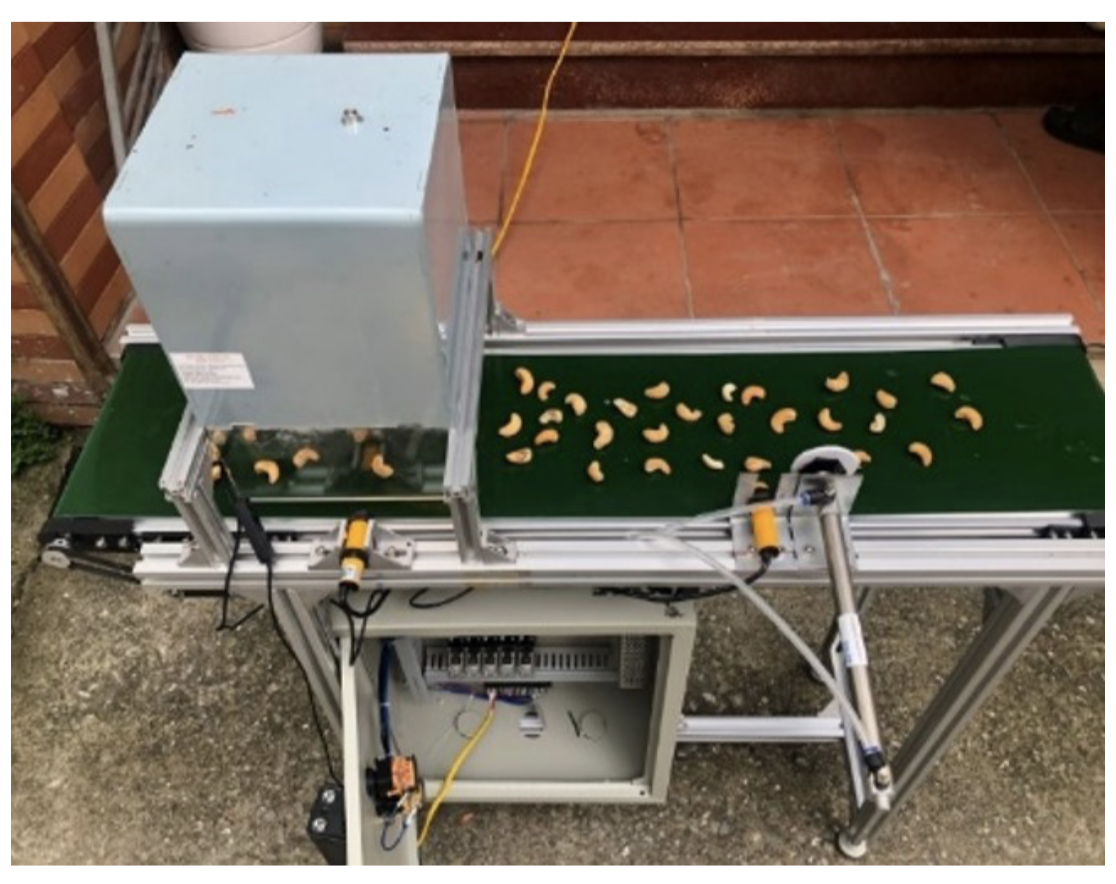
The grading system brings together several parts that work in harmony. Here’s a closer look at how it all fits together:
Conveyor System: Cashew nuts travel on a conveyor belt, which moves them through the grading system efficiently
.Camera System: A simple, affordable camera like the Logitech C922 captures images of the nuts. Consistent lighting ensures clear visuals for accurate analysis.
AI-Powered Classifier: This is where the magic happens. The AI combines two advanced models:
YOLOv8: A model designed to quickly detect objects in images, like individual cashew nuts.
Transformer: This model improves accuracy by analyzing patterns and relationships in the data, making it ideal for nuanced tasks like grading.
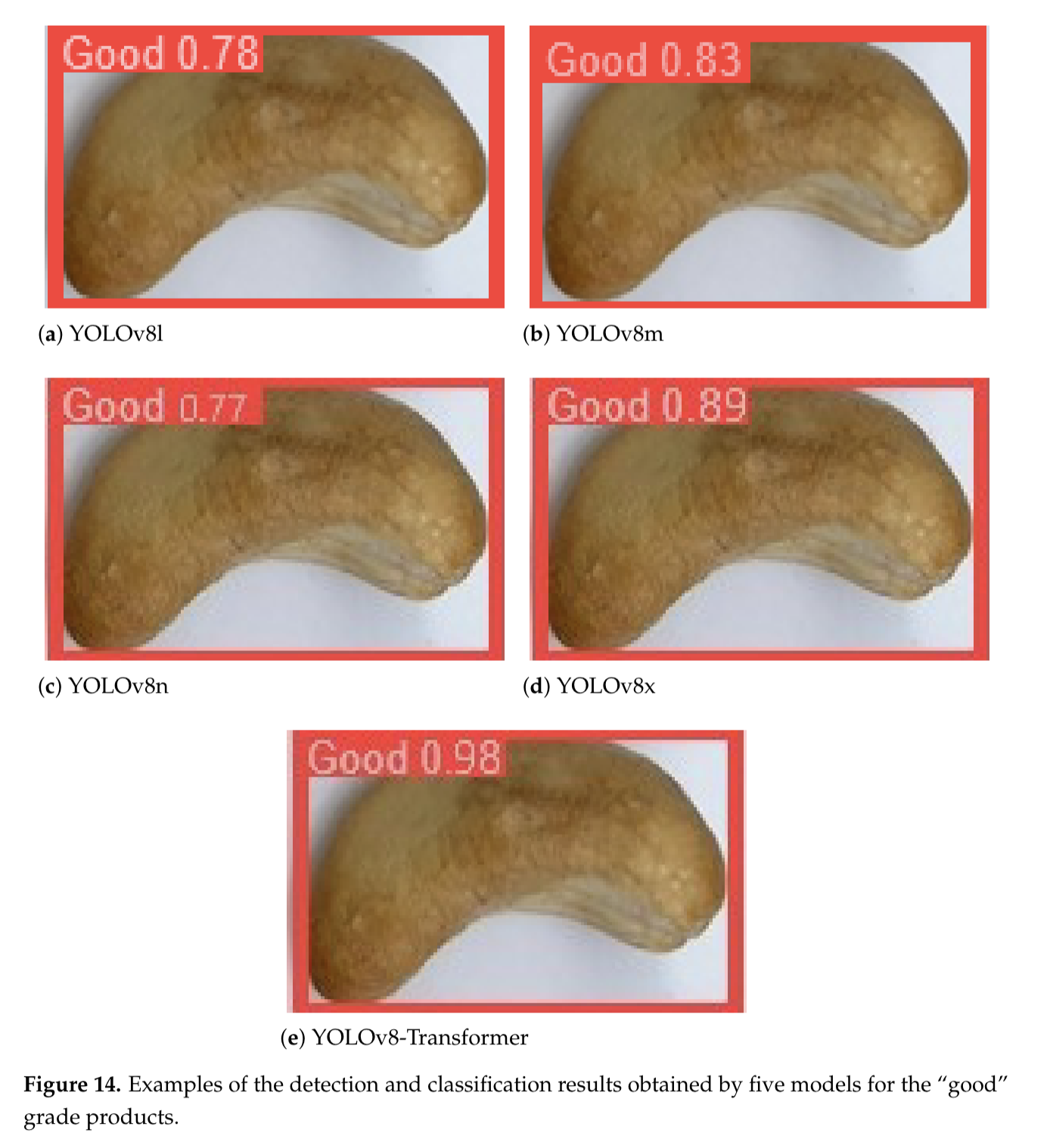
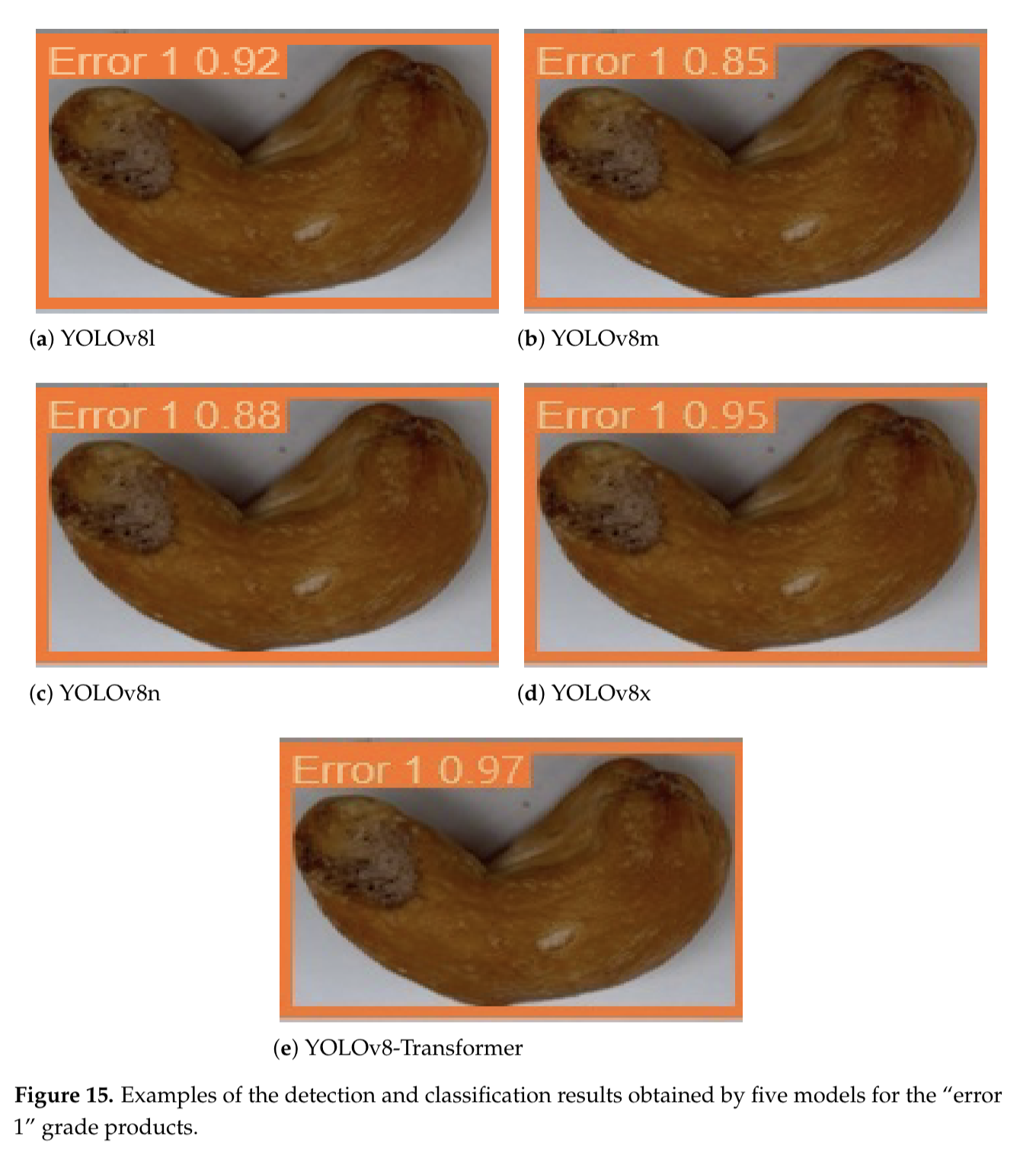
The AI examines each nut, identifying its quality based on specific features like cracks, peeling, and overall condition.
Sorting Mechanism: After classification, nuts are sorted into four grades:
Good: Fully peeled and undamaged.
Error 1: Slight cracks or minor damage.
Error 2: Partially peeled.
Error 3: Heavily cracked or broken.
Central Control Unit: This part oversees the process, displaying results and ensuring everything runs smoothly.
Why Is This Important?
AI isn’t just about convenience; it’s solving real problems in different fields, in this case, cashew production:
1. Affordability for Farmers: Existing systems are often too expensive for small-scale farmers. This low-cost solution levels the playing field.
2. Faster, More Reliable Grading: Manual grading is slow and inconsistent. The AI operates in real-time, delivering consistent results with minimal human input.
3. Tackling Labor Shortages: With fewer workers available for agricultural jobs, automation helps fill the gap, ensuring steady production.
4. Reducing Waste: Accurate sorting means high-quality nuts reach consumers, while lower-grade nuts can be used for other purposes instead of being discarded.
Real-World Impact
This system has already been tested in Vietnam, one of the world’s largest cashew producers. The results are promising: higher accuracy at a fraction of the cost of traditional methods. For farmers, this means more time to focus on other tasks while the AI handles grading with precision and speed.
Key Takeaways
This AI-powered cashew grading system shows how technology can transform even the simplest processes. By making grading more accessible, accurate, and efficient, it’s helping small-scale farmers stay competitive in a global market.
This is just one example of how AI is changing even the most mundane tasks, proving its potential to make a big impact in unexpected ways.
If you're excited about the possibilities of AI and want to be part of this technological revolution, consider enrolling in AI Degree. Our comprehensive program equips you with the skills to develop real-world AI solutions like this and opens doors to a future in cutting-edge technology.
